
Last updated November 20, 2026
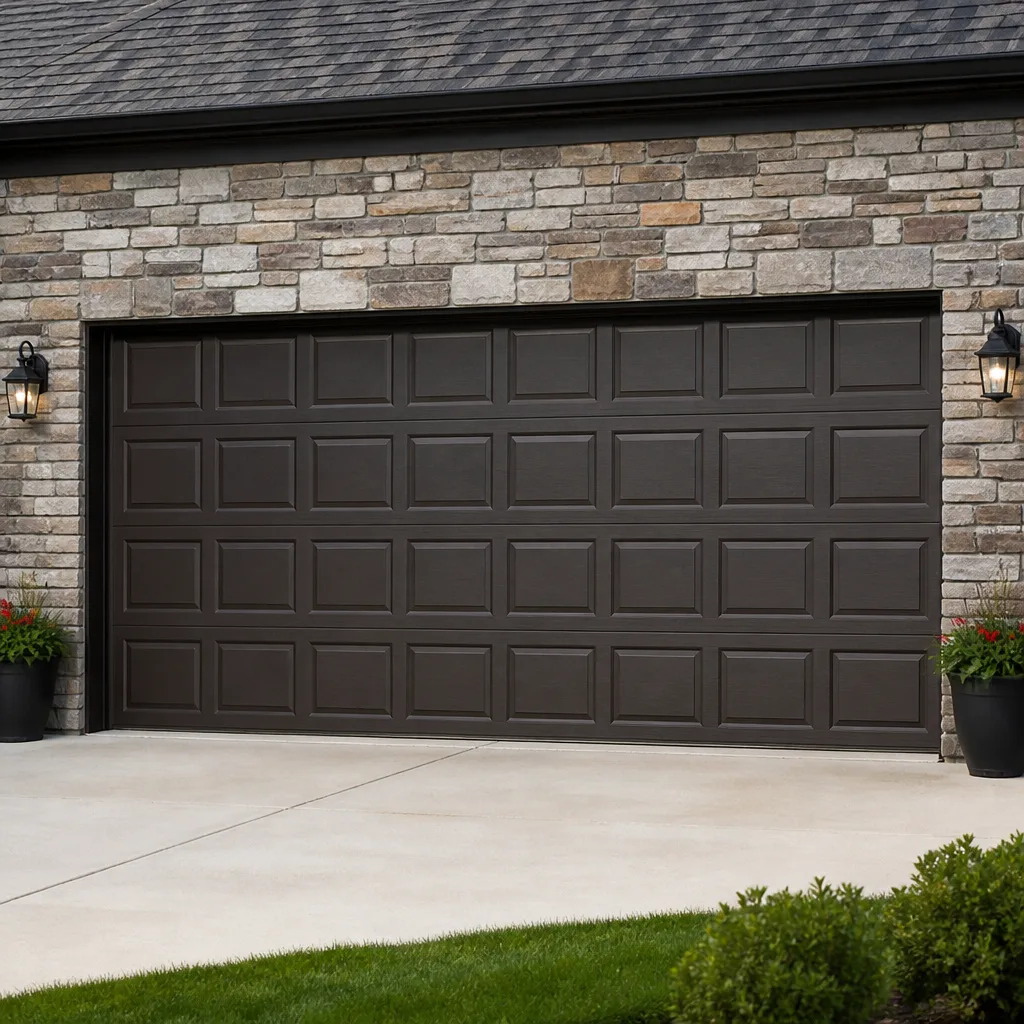 Raised-panel steel
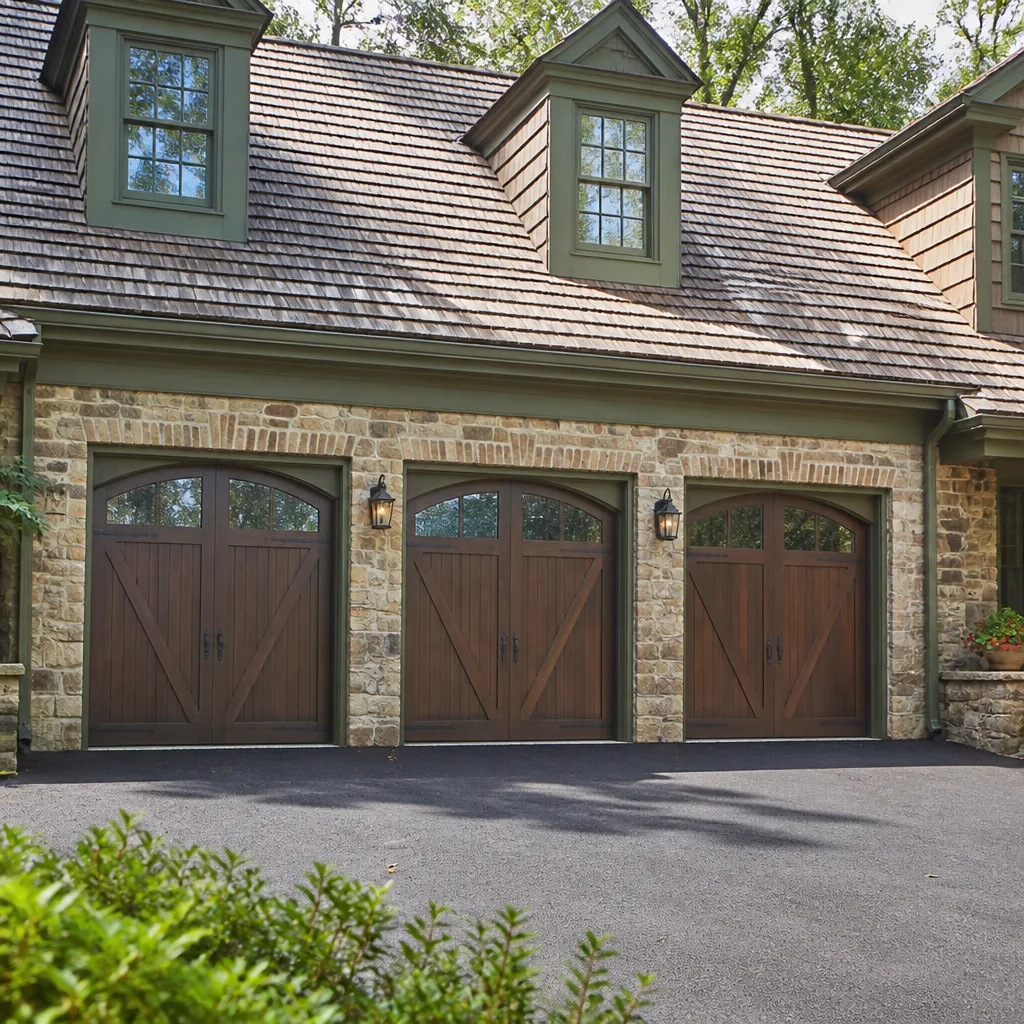 Carriage house
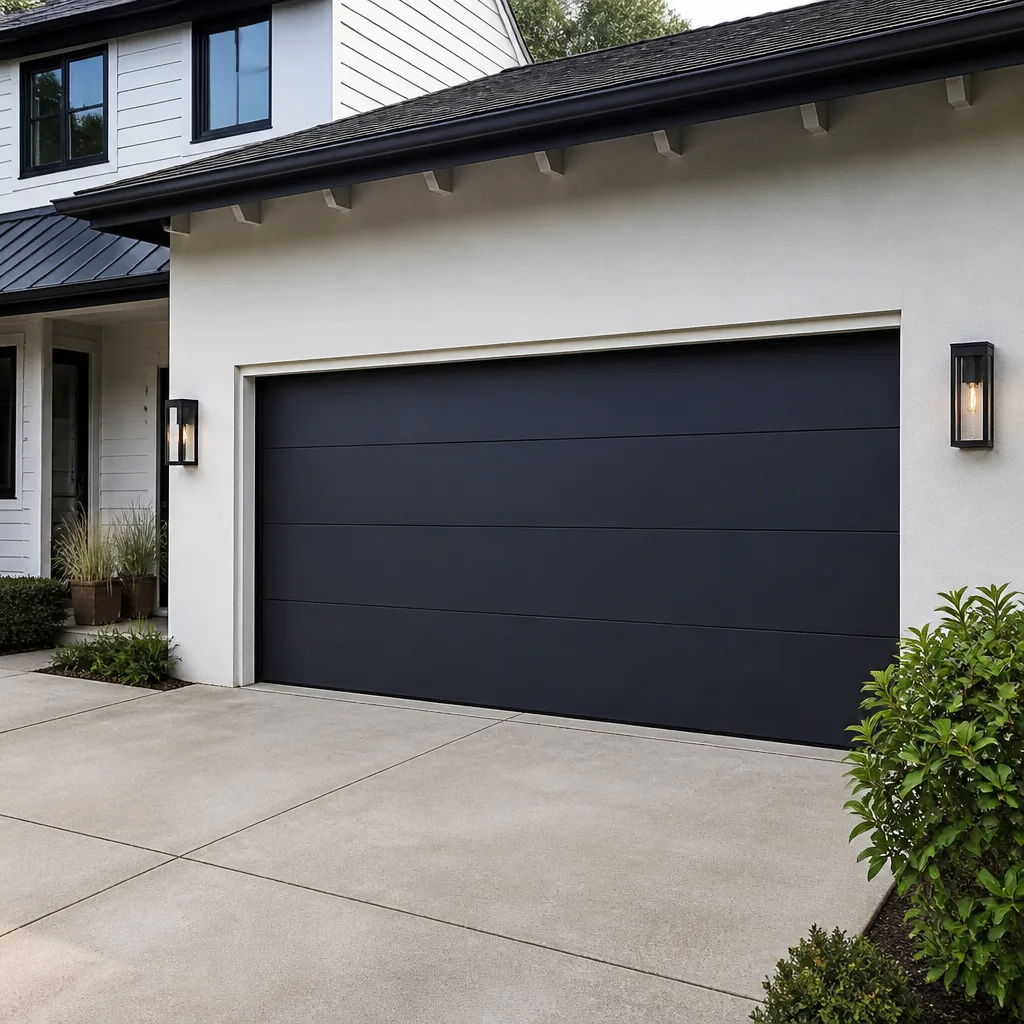 Modern flush
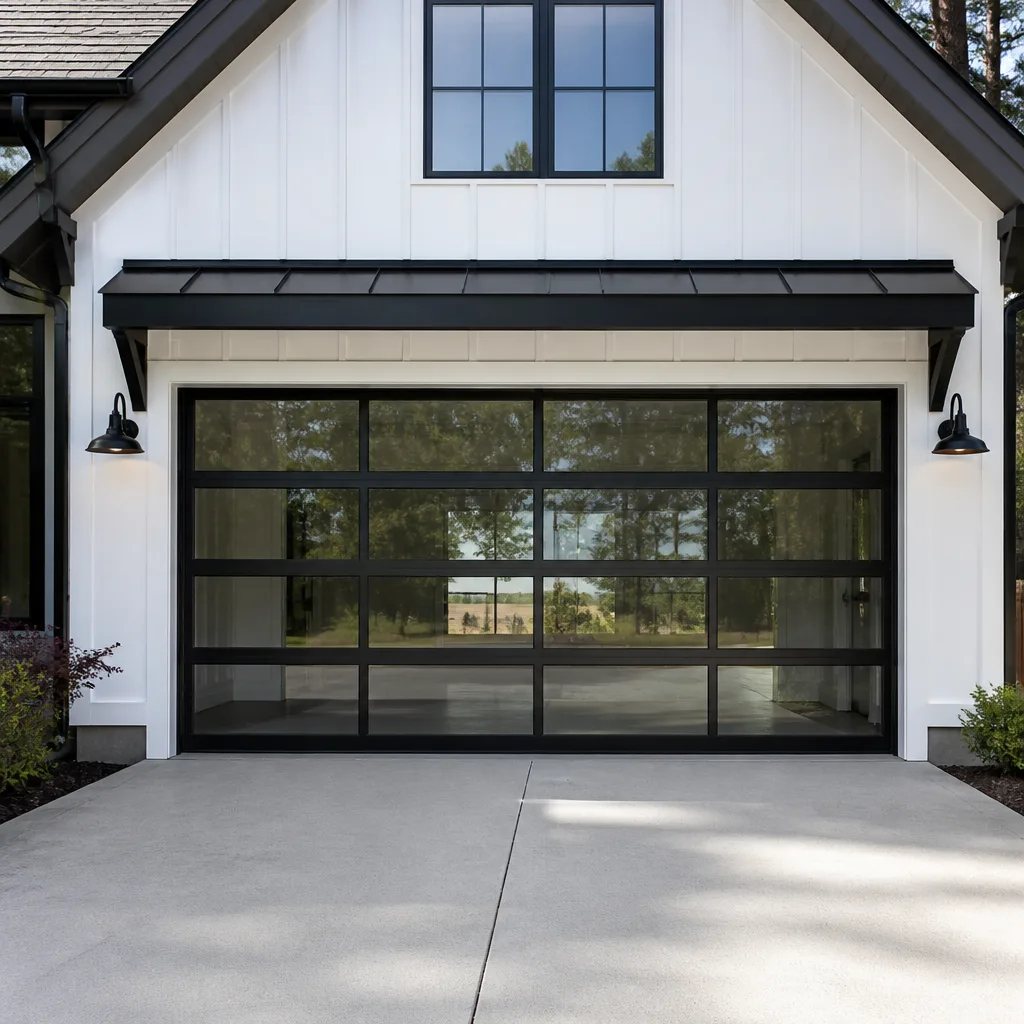 Full-view glass
 LiftMaster openers
 Chamberlain openers
Full 25-point door and opener safety check with every visit - springs, cables, rollers, tracks, and your LiftMaster or Chamberlain opener included
You get a price before we start. It does not change when the pro arrives.
Get your free estimateSeasonal Garage Door Care for Arlington: Year-Round Homeowner’s Guide
Most homeowners in Arlington treat a garage door like a fridge: it works until it doesn’t, and then someone gets called. That approach almost always costs more than it should. The reality is that a garage door responds to weather the way a wooden fence does, only with more moving parts and more ways to fail. Northern Virginia’s four-season swing puts genuine stress on a door in every direction, from January cold that contracts steel and freezes rubber to July humidity that swells wood and gums up hinges. This guide walks through what each season actually does to a door in Arlington, what to check before the weather turns, and where the line sits between a task you can handle and one that needs a trained technician. By the end, you’ll have a calendar you can actually use.
Quick Answer
Garage door care in Arlington works best on a four-season rotation rather than one annual tune-up: a pre-summer lubrication and balance check, a pre-winter bottom-seal and freeze-thaw inspection, a spring panel assessment after ice damage, and a fall auto-reverse sensitivity test before cold air throws off the opener’s force settings. Each season stresses a different part of the system, and handling the right task before it arrives prevents most of the emergency calls we see around Arlington.
Styles & brands we work with
- Raised-panel steel
- Carriage house
- Modern flush
- Full-view glass
- LiftMaster openers
- Chamberlain openers
Table of Contents
- Why One Annual Checkup Isn’t Enough in Arlington
- Spring Care: What Winter Ice Leaves Behind
- Summer Care: Lubrication Before the Humidity Peaks
- Fall Care: Recalibrating the Opener Before the Cold
- Winter Care: The Freeze-Thaw Cycle and Your Bottom Seal
- After a Severe Thunderstorm: A Post-Storm Checklist
- The Arlington Seasonal Maintenance Calendar
- Common Mistakes to Avoid
Why One Annual Checkup Isn’t Enough in Arlington
A garage door is a stack of materials that all expand and contract at different rates. Steel panels, aluminum tracks, nylon rollers, wooden or composite cores, rubber seals, and the torsion or extension springs that lift the whole thing are each sensitive to temperature and humidity in their own way. When you run a door through a Northern Virginia year, the whole assembly goes through real thermal cycling. A door that’s set up perfectly in April can be out of balance by October not because anything broke, but because a few components shifted with the weather and the spring tension no longer matches the door weight.
This is the difference between a routine check and seasonal care. A routine check verifies that nothing is visibly broken. Seasonal care anticipates what’s about to break and handles it before it does. In Arlington, the four pressure points are distinct enough to warrant their own tasks.
What each season does to your door:
- Winter cold contracts metal, stiffens grease, hardens rubber seals, and freezes the bottom of the door to the slab when moisture is trapped underneath.
- Spring warm-up reveals ice damage from the winter: hairline cracks in panels, warped sections, and loosened fasteners along the track brackets.
- Summer humidity swells wood door cores, softens old lubricant, and encourages corrosion at hinges and rollers as condensation forms and dries repeatedly.
- Fall thermal cycling shifts the door’s balance point and can render the opener’s force settings inaccurate, since those settings were calibrated when the door moved with less resistance.
Treating any single task as “the” garage door maintenance task misses three of the four. Arlington’s climate gives you genuine seasonal swings in all directions, which is why this guide is set up as a rotation rather than a list.
Spring Care: What Winter Ice Leaves Behind
The first thing to inspect when the weather warms in Arlington is the door panels themselves. Winter ice, particularly the kind that builds up in gutters and along the top edge of the door, finds its way into panel seams and freezes there. When it expands, it can crack a panel from the inside out, and the crack won’t show until the panel weakens under the heat and weight of spring. What looks like a cosmetic scuff in April can become a structural problem by June if you don’t know what to look for.
Ice damming is more of a roof phenomenon than a garage door one, but the pattern is the same: water pools where it can’t drain, freezes, expands, and stresses whatever it’s touching. On a garage door in Arlington, that usually means the bottom panel, the frame around the top of the opening, and the panel seams along the door’s edges. Hairline cracks often start there.
What to check on your panels in early spring:
- Walk the door with the opener disconnected and look at each panel edge under a strong light. A hairline crack will show as a fine dark line at a seam or near a panel edge.
- Press gently on each panel with the heel of your hand. If any area flexes more than the surrounding material, the panel has lost structural integrity, and it needs a professional assessment before it gets worse.
- Look along the frame for signs of water staining or repeated freeze marks (chalky mineral lines). Those indicate where water has been sitting.
- Check the hinges and roller brackets for rust bloom. Steel hardware that’s been through a wet winter shows early corrosion before it shows failure.
- Test the door by hand with the opener disconnected: lift it halfway and see if it stays balanced. A door that sags or won’t stay in place is telling you something shifted over the winter.
If you find a panel crack, don’t try to fill it or paint over it. Panels carry structural load in some designs, and cosmetic patching hides a problem that will reappear. Clopay panels, for example, have specific limit points where a crack should trigger replacement rather than repair. If you need a hand, our garage door repair team covers panel assessment and replacement.
Summer Care: Lubrication Before the Humidity Peaks
The most underrated task on the seasonal calendar is the lubrication you do before July humidity rather than after. Homeowners tend to think of lubrication as a fix for a squeaky door, but in Arlington’s DC-metro climate it’s actually preventative. Once the humidity peaks, condensation forms on cool metal surfaces in the morning and dries by midday. That repeated wet-dry cycle is the ideal environment for corrosion at hinges and rollers, and old lubricant that’s broken down from previous seasons can trap grit in those joints instead of protecting them.
Fresh lubricant applied in late May or early June gets ahead of that cycle. It also softens the grease that’s already there, so any dry or stiff hinge gets a clean reset before the worst humidity arrives. If you wait until August to lubricate because the door just started squeaking, you’ve already lost the season.
What to lubricate and what to leave alone:
- Lubricate: hinges, roller bearings (not the roller surface), the torsion spring coils lightly, and the opener’s chain or screw drive if it’s designed for it. Use a garage-door-specific lubricant, not WD-40, which is a solvent and will strip the existing grease.
- Do not lubricate: the track itself. A dry track is correct. Grease on the track attracts dust and grit that wears rollers faster.
- Leave alone: the torsion spring under tension at the center of the shaft. Even a light touch can be dangerous if the spring is near failure.
Spring balance and safety check (do these with the opener disconnected):
- Close the door fully, then pull the manual release to disconnect the opener.
- Lift the door to the halfway point and let go. A balanced door stays put or drifts slowly in one direction.
- If the door slams down or needs significant effort to lift, the spring tension is wrong and needs adjustment by a trained technician.
- Check the photo-eye safety sensors at the bottom of the track. Wipe the lenses and confirm the indicator lights are solid, not flickering.
- Test the auto-reverse with a roll of paper towels laid flat under the center of the door (never a person or pet). The door should reverse on contact.
Spring work is where the safety line gets sharp. Torsion springs hold enough stored energy to cause serious injury if handled incorrectly, and extension springs can fail violently when the safety cable isn’t in place. If the balance test on your door shows a problem, leave the spring adjustment to a specialist. Our garage door spring repair service exists for exactly this reason, and it’s work that should never be DIY.
Fall Care: Recalibrating the Opener Before the Cold
Here’s the pattern we see most often heading into winter in Arlington. The opener’s force settings were calibrated during summer, when the door rolled smoothly in warm weather with soft lubricant and expanded panels. As the cold arrives, the door’s moving parts stiffen, the lubricant thickens, and the door actually requires more force to move. An opener calibrated in July may not have enough sensitivity in December, and it will start under-triggering on the safety reverse.
The auto-reverse is the safety feature that stops the door from crushing whatever is beneath it. When it stops working properly, the door will keep going. In cold weather the mechanical resistance goes up and the opener’s logic can read a normal obstacle as a blocked door, but the more dangerous failure mode is the opposite: the door reads a real obstacle as normal and doesn’t reverse. Both are dangerous to children, pets, and property.
Test the auto-reverse before the cold sets in:
- Lay a roll of paper towels on the ground at the center of the door’s path, directly under the leading edge.
- Close the door with the opener. When it contacts the roll, the door should reverse and return to open fully without hesitation.
- Repeat the test at the sides of the door too, since a door can meet resistance unevenly.
- Test the photo-eye sensors separately: block one with your leg or a piece of cardboard while the door is closing. The door should reverse immediately on the sensor break, not on physical contact.
- If either test fails, the opener needs recalibration or repair before winter. A LiftMaster or Chamberlain unit with a failing safety circuit is a liability, not a convenience.
While you’re at it, check the opener’s manual release. In cold weather, if the door won’t open, you’ll want to know you can release it and lift by hand. Test the release handle to confirm it moves freely and that the door can be lifted manually afterward. If the release is seized or the manual lift is too heavy, the door has a balance issue rather than an opener problem, and it needs professional service. Our garage door opener repair team handles both kinds of diagnosis.
Winter Care: The Freeze-Thaw Cycle and Your Bottom Seal
This is the single most important check on the Arlington calendar. The bottom seal is the rubber strip along the bottom edge of your door that creates the weather-tight fit against the concrete slab. In a wet fall, moisture gets trapped under the seal and stays there. When the first hard freeze arrives, that moisture becomes ice and bonds the rubber directly to the slab. The door tries to lift, and either the opener fights a door that’s frozen to the ground or, worse, the opener succeeds and the seal tears away from the door.
Arlington’s freeze-thaw cycle frequency is what makes this the annual problem rather than a one-off. When temperatures bounce above and below freezing repeatedly through winter, the bottom seal goes through that bonding-and-releasing pattern over and over. Each cycle stresses the rubber, weakens the seal’s adhesion to the bottom panel, and progressively damages the opener if it’s fighting the freeze each morning.
Pre-winter bottom seal inspection protocol:
- Examine the seal from the outside. Get down to floor level and look at the entire length of the bottom seal where it meets the slab. Look for cracked rubber, gaps at the ends, and any section that’s lifted away from the panel.
- Check the seal’s flexibility. Press your thumb into the rubber. It should compress and spring back. If it’s brittle or has lost its resilience, replace it before winter. A stiff seal won’t make a weather-tight fit.
- Look for moisture wicking up the inside of the bottom panel. Rust stains or swelling at the very bottom edge of the panel indicate a seal that’s been passing water for a while.
- Confirm the seal sits flush to the slab across the full width. Gaps at the ends or along one side tell you the door isn’t level or the seal isn’t the right thickness.
- If the seal is intact but stiff, apply a rubber-compatible seal treatment (avoid oil-based products, which can degrade some rubber compounds).
A door that’s frozen to the ground in the morning is a warning, not just an annoyance. Do not keep forcing the opener to lift a door that’s bonded. That’s exactly the failure mode that strips gears inside the opener or snaps the spring. If you suspect a frozen seal, release the opener and lift the door by hand from the outside. If it doesn’t lift easily, stop there and call. The refrigeration-grade damage from repeatedly forcing a stuck door is often more expensive than the seal itself.
For doors with older panels, winter is also the season to look at the bottom panel’s paint and finish. Water that pools on a damaged finish will accelerate rust, and the bottom panel takes the worst of it every winter. Sanding and repainting before the cold arrives costs far less than replacing a rusted panel in March.
After a Severe Thunderstorm: A Post-Storm Checklist
Spring and early summer bring the DC metro its share of severe thunderstorms, and they hit garage door systems in two ways that homeowners don’t always connect. The first is debris impact: branches, hail (rare here, but wind-driven debris is common), and flying objects hitting panels and glass. The second is power delivery: a surge on the grid from a lightning strike or transformer failure can reach an opener even from a nearby strike. Surges can degrade opener boards without visibly frying them, which is why a door that opens slowly or hesitates after a storm may need a control board repair rather than a motor.
Post-storm checklist for Arlington homeowners:
- Inspect the door panels visually before pressing the opener. Debris against the door is one problem, but a visibly dented or separated panel changes the door’s structural integrity, and lifting it can make things worse.
- Check the track alignment. A close lightning strike or strong wind can shift the track. Look down the length of each vertical and horizontal track and check for bowing or separation from the wall.
- Test the opener’s basic functions once the power is stable. Press open. If the door opens but doesn’t close, or opens only partially and reverses, the safety circuit or force settings may have been affected.
- Confirm the photo-eye sensor lights are still solid. A storm surge can kill one sensor’s LED while leaving the other alive, which presents as the door closing partway then reversing.
- Look at the spring for visible damage. A torsion spring that has failed will show a visible gap in the coil. A failed extension spring will show its safety cable out of position. If either has failed, do not attempt to lift the door with the opener.
- Check the wall-mount control for signs of water intrusion if your garage took on water. A Genie or Chamberlain wall control that got wet should be dried and tested carefully, not just switched on.
- Schedule a diagnostic if anything seems off after a storm. A door that “mostly works” after a surge can fail in a more expensive way two months later, and diagnosis is what separates a control board repair from a full opener replacement.
If your door took a direct hit or your opener misfires after a storm, our garage door specialists can assess the full system: door, opener, springs, and safety circuits in one visit. We work on the brand you already have, whether it’s LiftMaster, Chamberlain, Genie, or Clopay.
The Arlington Seasonal Maintenance Calendar
Here’s the whole rotation condensed into a single reference you can pin to the garage wall. These windows are set to Arlington’s climate, not a generic national schedule. Shift them earlier if the season arrives early.
Late February to mid-March:
- Full panel inspection for ice damage and hairline cracks
- Hinge and roller hardware inspection for rust bloom
- Manual balance test with opener released
- Track alignment check after winter ground movement
Late May to early June (before humidity peaks):
- Full lubrication of hinges, roller bearings, and spring coils
- Track cleaned dry (no lubricant on the track)
- Weather seal on the door’s perimeter checked for a snug fit
- Auto-reverse test on the door itself
- Photo-eye sensor wipe and indicator light check
September to early October (before the first cold snap):
- Auto-reverse test again, with attention to force settings
- Manual release test and manual lift check
- Opener force recalibration for the cold season
- Confirm the opener’s travel limits are accurate
Late October to mid-November (before the first hard freeze):
- Full bottom seal inspection with the thumb compression test
- Replacement of any brittle or damaged bottom seal
- Hinge lubrication for cold weather (lighter viscosity grease)
- Hardware torque check on track brackets and hinges
- Opener battery backup test (if your unit has one)
Two extra windows worth noting. In late summer, after the worst humidity, do a spot check on wood door panels for swelling and on steel doors for bubbling paint that might indicate hidden corrosion. And after any severe storm, run the post-storm checklist in this guide regardless of the season.
If the calendar feels like too much to manage, a single annual visit that covers all four tasks in one appointment works just as well. Our technicians have up to 10 years of experience across torsion and extension springs, openers, and panel assemblies, so one visit can cover all of it.
Common Mistakes to Avoid
- Lubricating the track. The track should be dry. Grease on the track collects grit that accelerates roller wear and causes the door to jump the track. Keep lubricant on the hinges and roller bearings, not on the rail surface.
- Using WD-40 as a lubricant. WD-40 is a water displacer and solvent, not a long-term grease. Applied to hinges and rollers, it strips the existing lubricant and leaves the joint dry within a few weeks, which in Arlington’s humidity means faster corrosion than if you’d left it alone.
- Skipping the pre-winter bottom seal check. This is the task most homeowners skip and the one that costs the most when ignored. A frozen seal in Arlington’s freeze-thaw cycle either tears the seal or fights the opener until the gearbox strips.
- Ignoring summer force settings until the fall. An opener calibrated in July needs recalibration before cold weather. Waiting until the door “acts slow” in December means the door may already have failed an auto-reverse test without the homeowner knowing.
- DIY torsion spring adjustment. Torsion springs hold enough stored energy to cause serious injury even when you think the door is down. Besides the injury risk, an improperly adjusted spring has an uneven load that wears the opener prematurely.
- Overlooking panel cracks until they spread. A hairline crack in a panel near the bottom (from prior winter ice) can look cosmetic. If you don’t find it in spring, it will often be more advanced by summer heat and heavier by fall, which is why the spring inspection window matters.
- Using the wrong track for the wrong door. If you replace a track section yourself, confirm it matches the door’s original radius and gauge. A mismatched track section causes the door to bind at the curve, which puts stress on the spring and opener.
See the difference
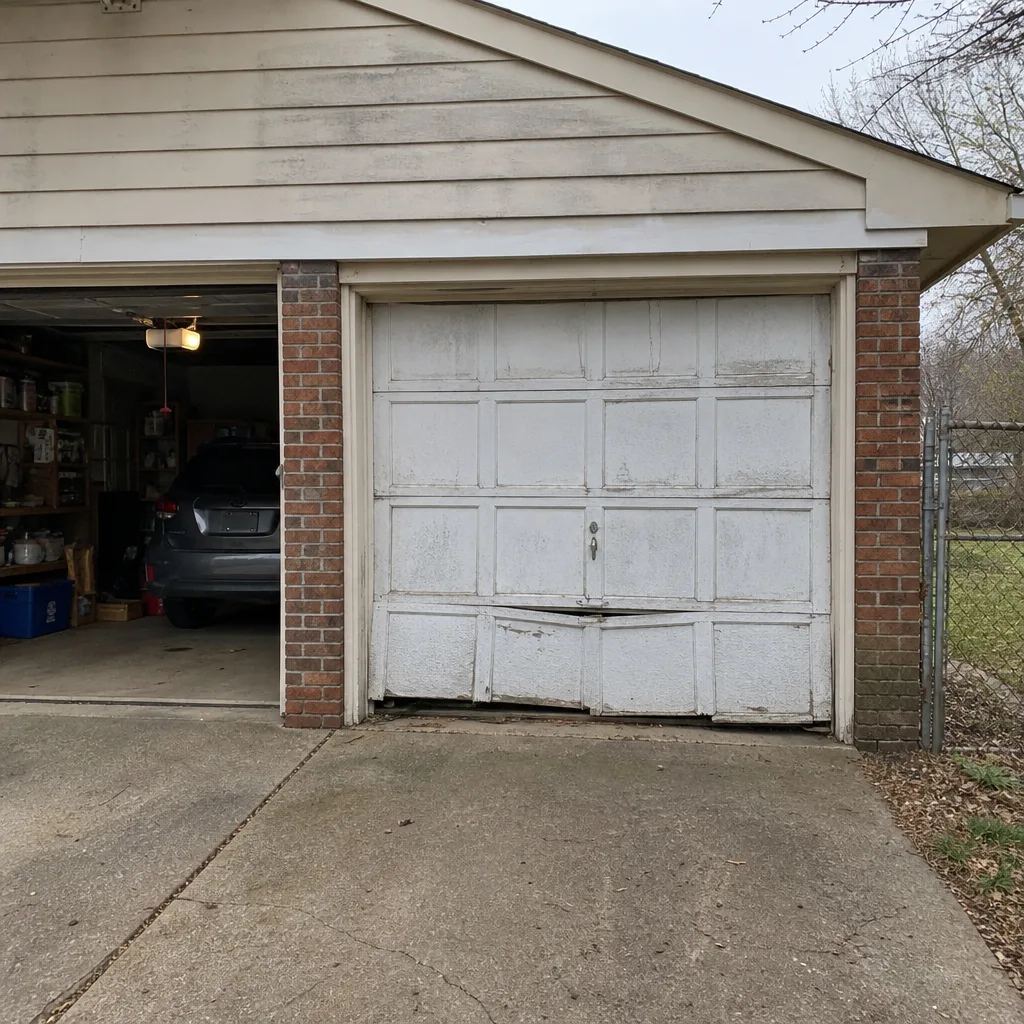 Before
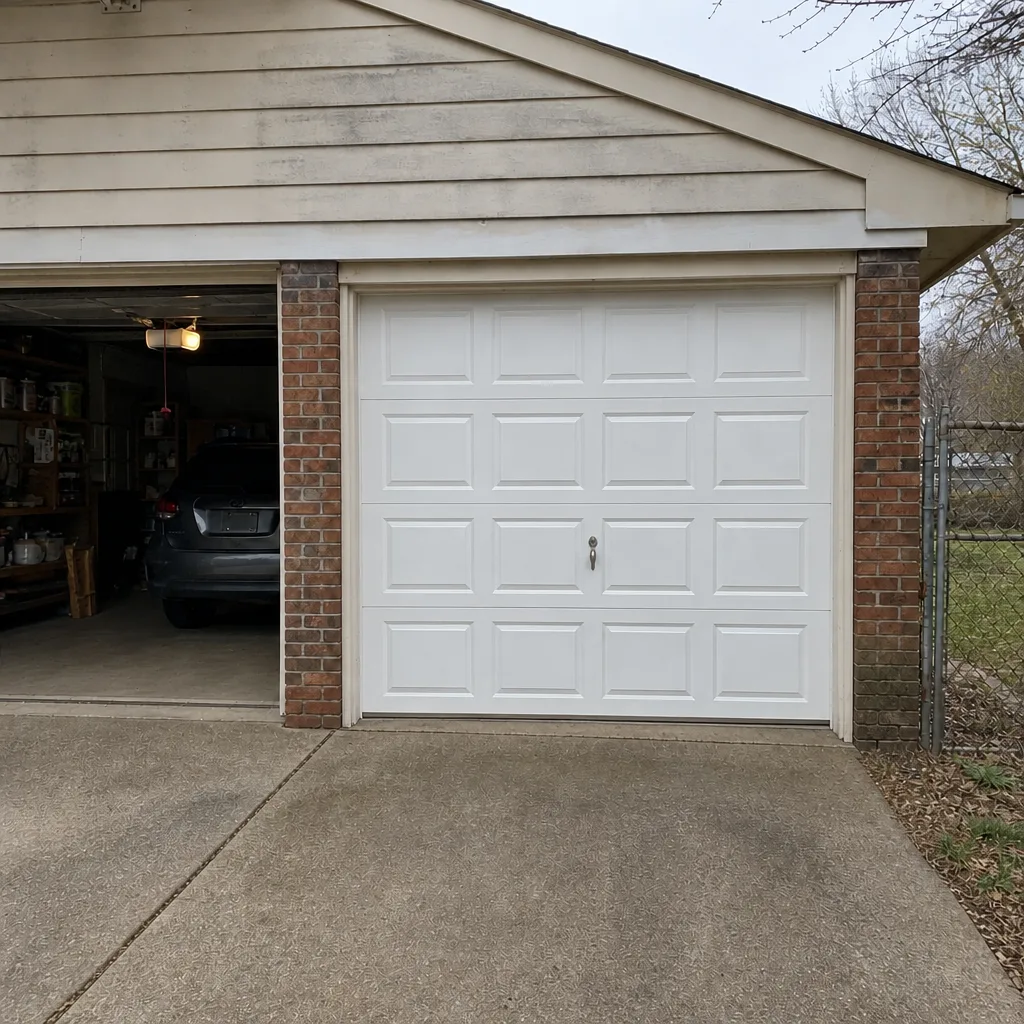 After
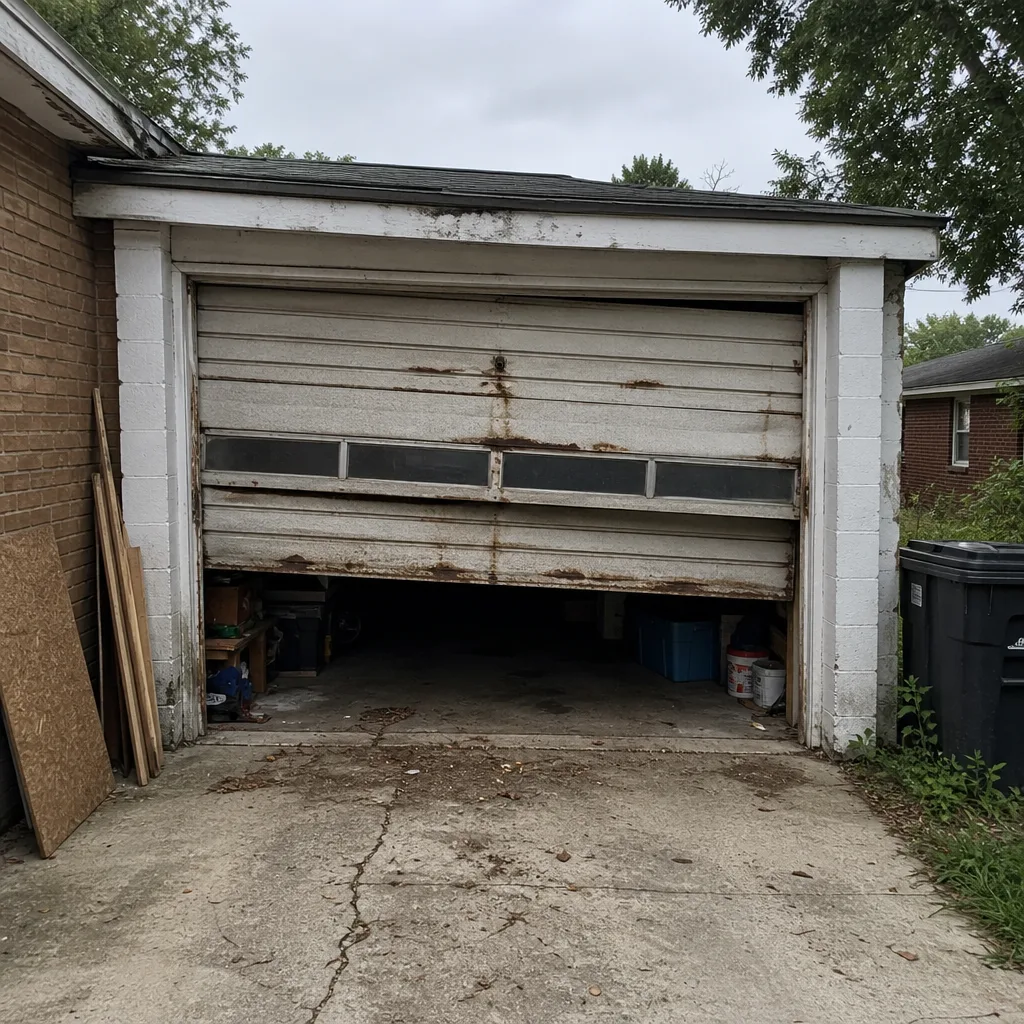 Before
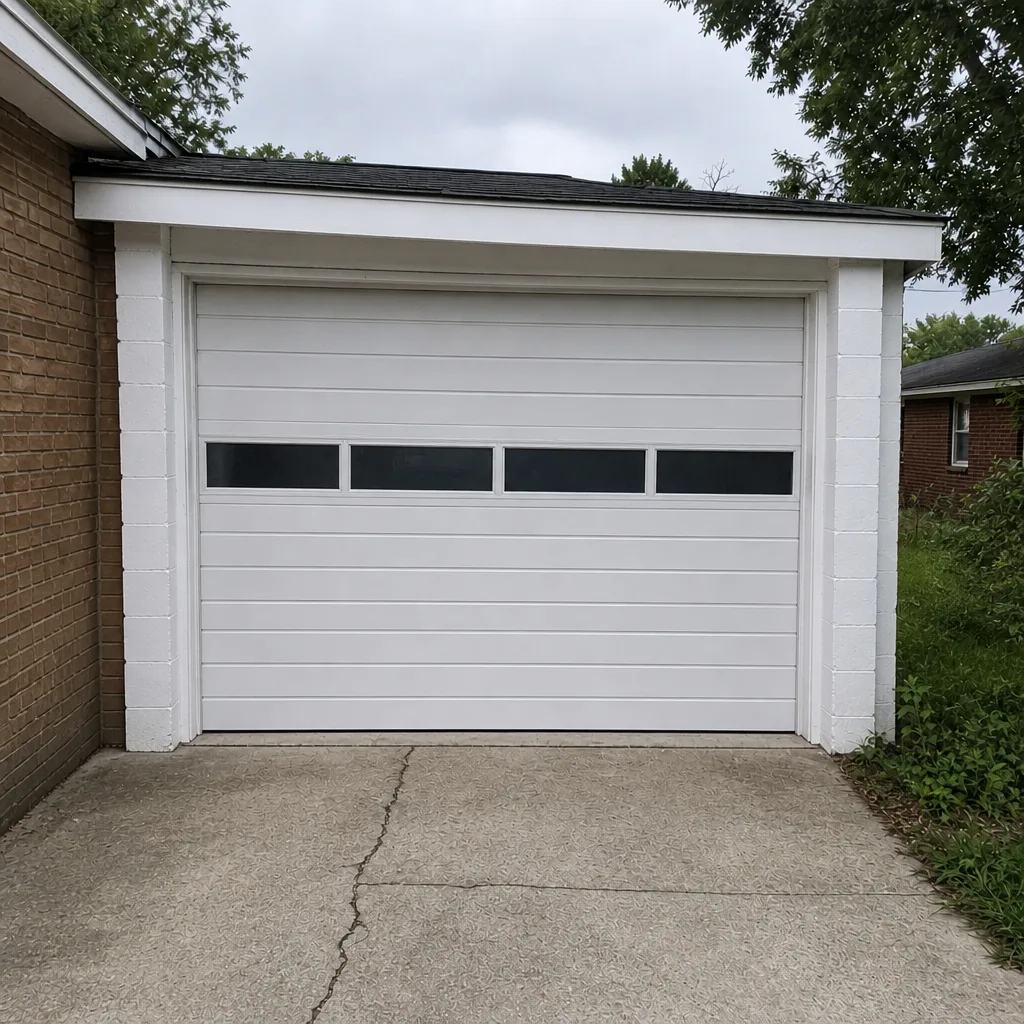 After
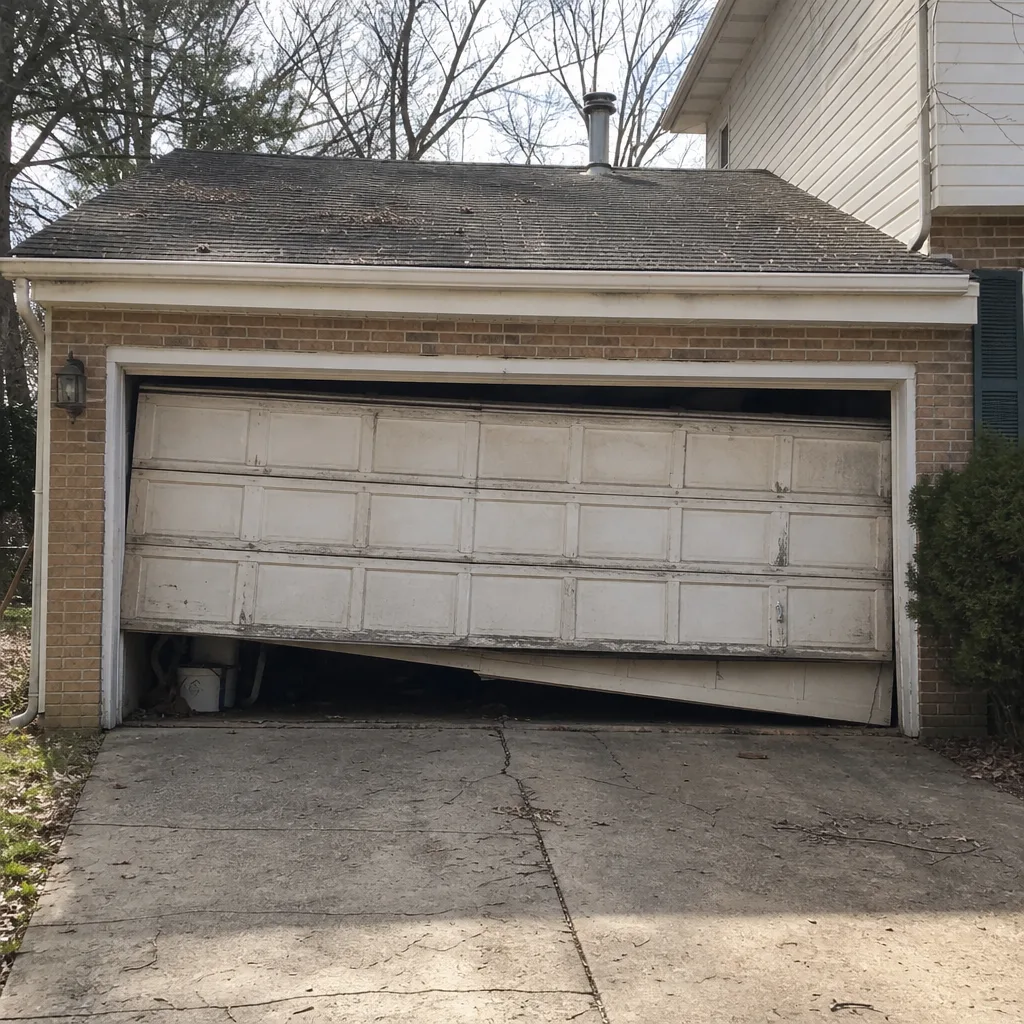 Before
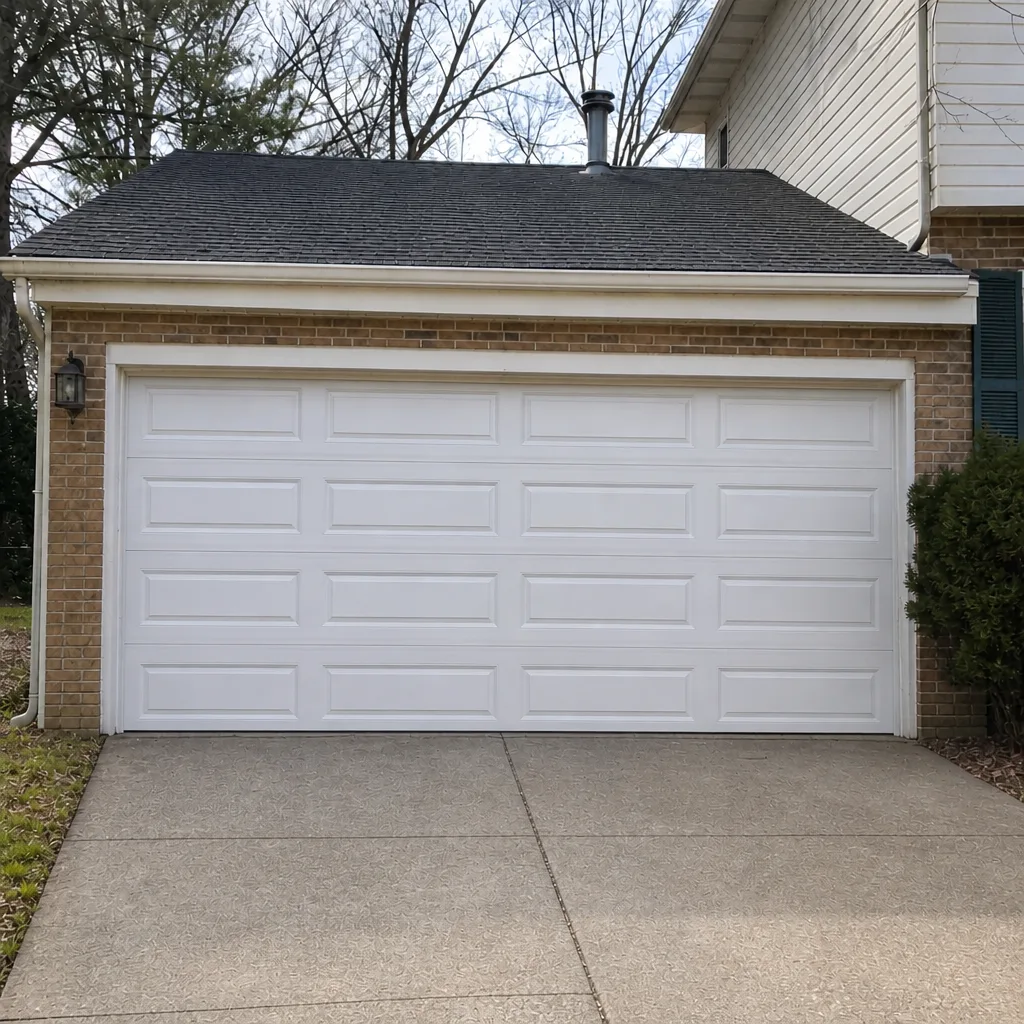 After
When to Call a Professional
Some seasonal tasks are safe to do yourself: lubricating hinges, wiping sensors, testing the auto-reverse, and inspecting panels visually. Others sit firmly in professional territory, and stopping before those is a safety decision, not a laziness one. Call a specialist if the door slams down or won’t stay halfway when you release the opener, if the balance test shows the door is much heavier than usual to lift, if you find a torsion spring with a visible gap, if the manual release is stuck, if the opener reverses on its own or fails the auto-reverse test, if you see a panel crack, or if the door has frozen to the floor and won’t release by hand. Springs, cables, and panels carry injury and structural consequences, and the wrong-handled repair often costs more than the original problem would have.
Arlington Garage Door Repair Experts offers free estimates in Arlington. Call (844) 524-5950. We answer 24/7, and fast dispatch runs from 7am to 7pm, Sunday through Friday. Every price is quoted and agreed before work starts, so the written estimate is the number you’ll see on the invoice.
Frequently Asked Questions
Plan on four seasonal touchpoints each year: a spring panel inspection after winter, a pre-summer lubrication around late May or early June, a fall auto-reverse and opener recalibration, and a pre-winter bottom seal check before the first hard freeze. The pre-winter check is the one to prioritize, because Arlington’s freeze-thaw cycle creates the most expensive failure mode of the year. If that’s too much to track, a single annual service visit that handles all four in one appointment covers the same ground.
Cold weather stiffens lubricant, contracts metal, and hardens the bottom seal, which all increase the force needed to move the door. An opener calibrated during summer may not have the right sensitivity for winter conditions, which is why doors often fail the auto-reverse test in cold weather. The fix is usually to recalibrate the opener force and settings before the first cold snap, not to wait until the door actually misbehaves. If the door also feels much heavier to lift by hand, the spring tension is off, and it needs professional adjustment.
The bottom seal is the rubber strip along the bottom edge of the door that seals against the concrete to keep out water, air, insects, and small debris. In Arlington, its importance is tied to the freeze-thaw cycle. Moisture trapped under the seal freezes the rubber to the slab, and the door either fights that freeze every morning or tears the seal away. The pre-winter inspection (checking flexibility, gaps, and moisture damage at the panel edge) is what prevents both.
Yes. Lay a roll of paper towels on the ground under the center of the door, press close, and confirm the door reverses and returns without hesitation when it contacts the roll. Also test the photo-eye sensors by blocking one with a cardboard sheet while the door is closing. If either test fails, the opener needs calibration or repair before winter. The test itself is safe; only the physical repair or adjustment is specialist work.
Yes, but not usually the way homeowners expect. Direct lightning damage is possible, but the more common issue is a power surge from a nearby strike or transformer failure that reaches the opener’s control board. That can leave the opener functioning but unreliable: slower travel, hesitations, or intermittent auto-reverse failures. After a severe storm, run the post-storm checklist in this guide. A door that “mostly works” after a surge can fail more expensively later.
It depends on where the crack sits and what the panel does structurally. A hairline crack near the bottom edge that’s gone through the metal or composite core is usually a replacement, because the panel is carrying load and a patch won’t restore that. A cosmetic crack that only affects the surface coating can sometimes be repaired. Have it assessed in spring before summer heat spreads it. A trained technician working with a specific manufacturer like Clopay can tell you which category the damage falls into.
The Bottom Line
Four touchpoints beat one tune-up here. Your Arlington garage door faces real seasonal pressure in every direction: ice damage in spring, humidity in summer, force-setting drift in fall, and freeze-thaw on the bottom seal in winter. Handle the tasks in the order this guide lays out and you’ll catch failures while they’re still cheap. Most of the work is inspection and lubrication you can do safely yourself. The rest (spring adjustment, opener recalibration, panel replacement) is where specialist care matters, and getting it right the first time is what keeps the door, the opener, and the springs in step. A garage door has three high-stakes failure points; a seasonal check reaches all three.
If a check turned up something you’d rather not handle yourself, or the schedule is just easier on one annual visit, call Arlington Garage Door Repair Experts at (844) 524-5950 for a free estimate. We work on the brand you already have, and springs, openers, and panels are covered in one call. We answer 24/7, with fast dispatch from 7am to 7pm, Sunday through Friday.
Written by the team at Arlington Garage Door Repair Experts.