
Last updated November 20, 2026
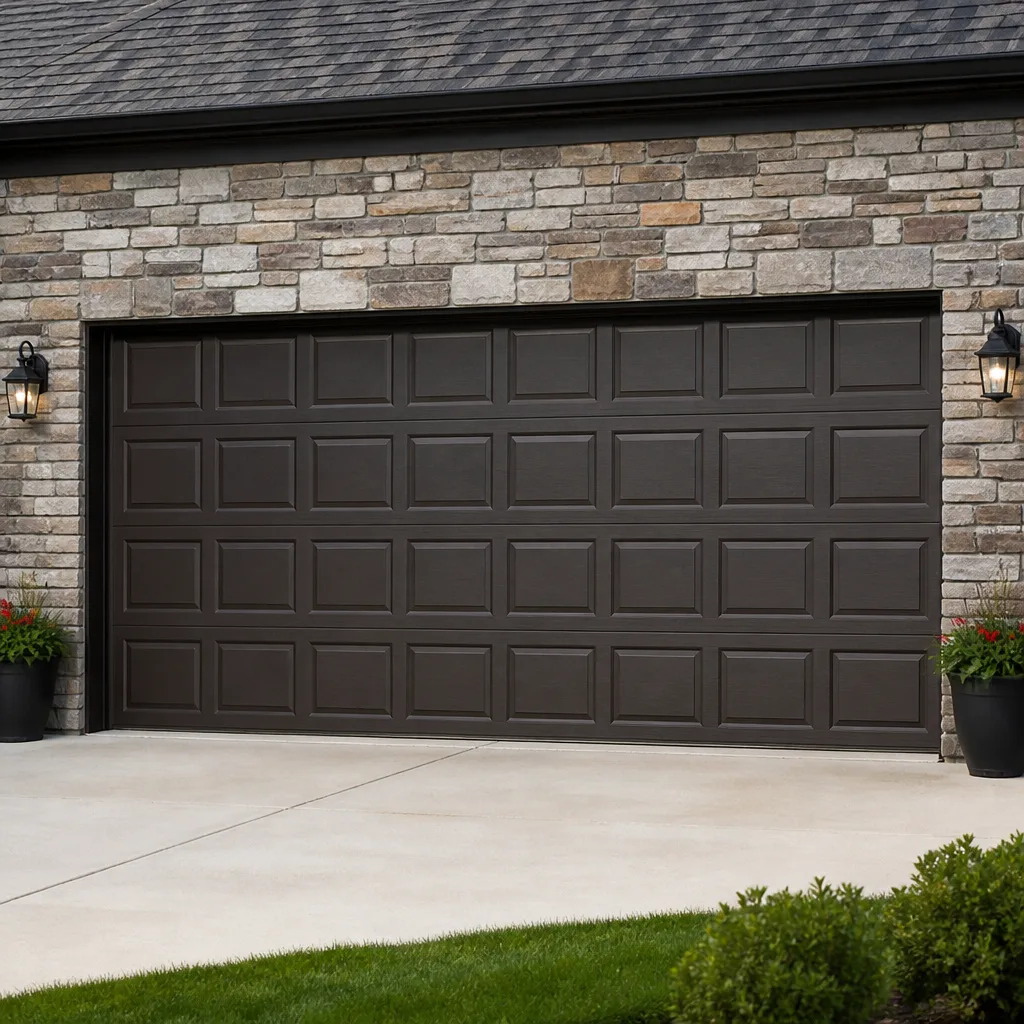 Raised-panel steel
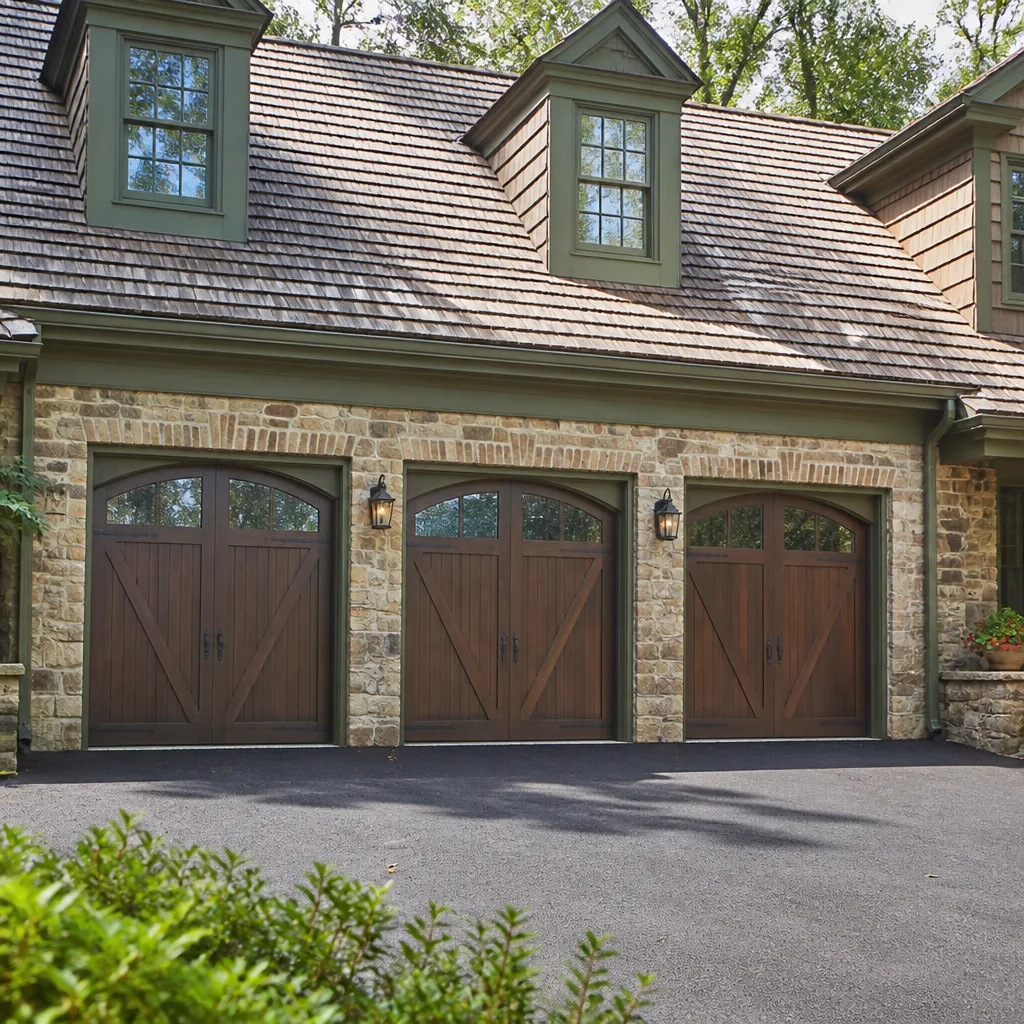 Carriage house
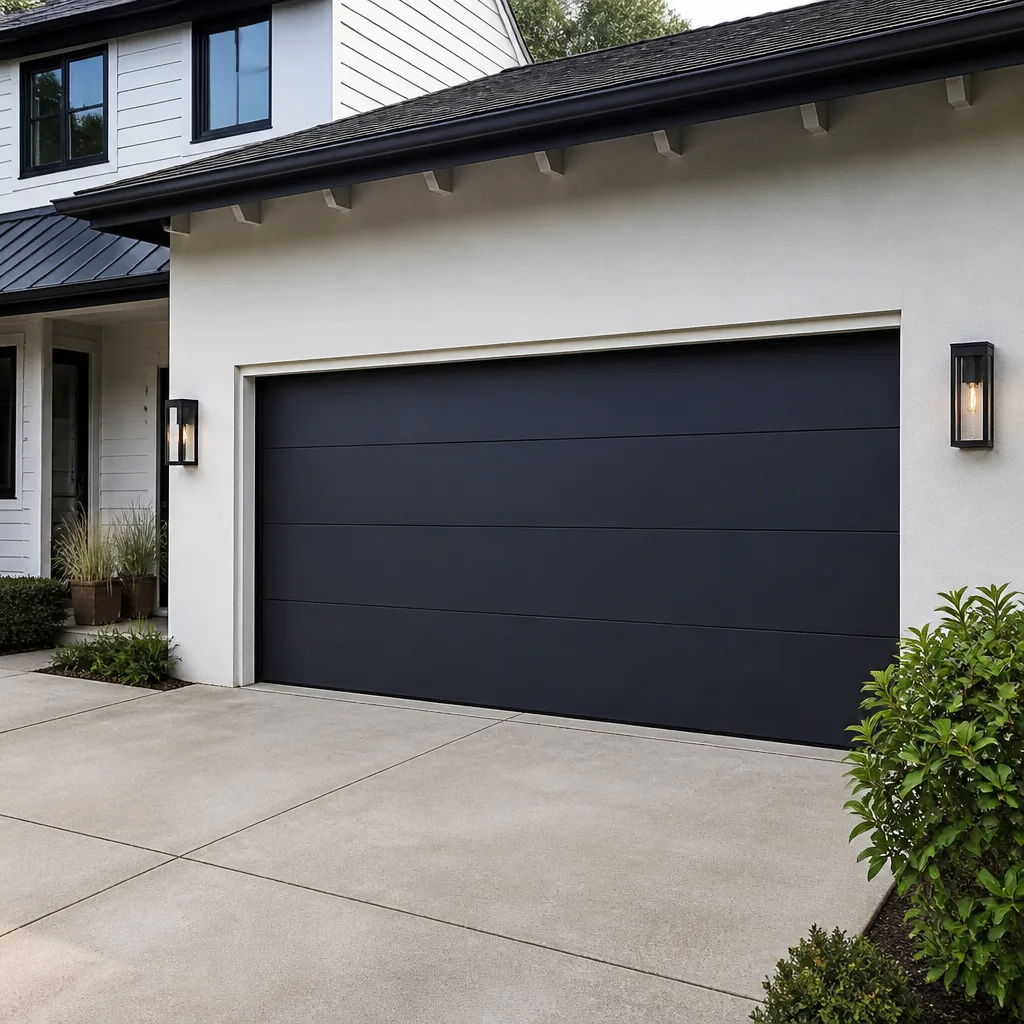 Modern flush
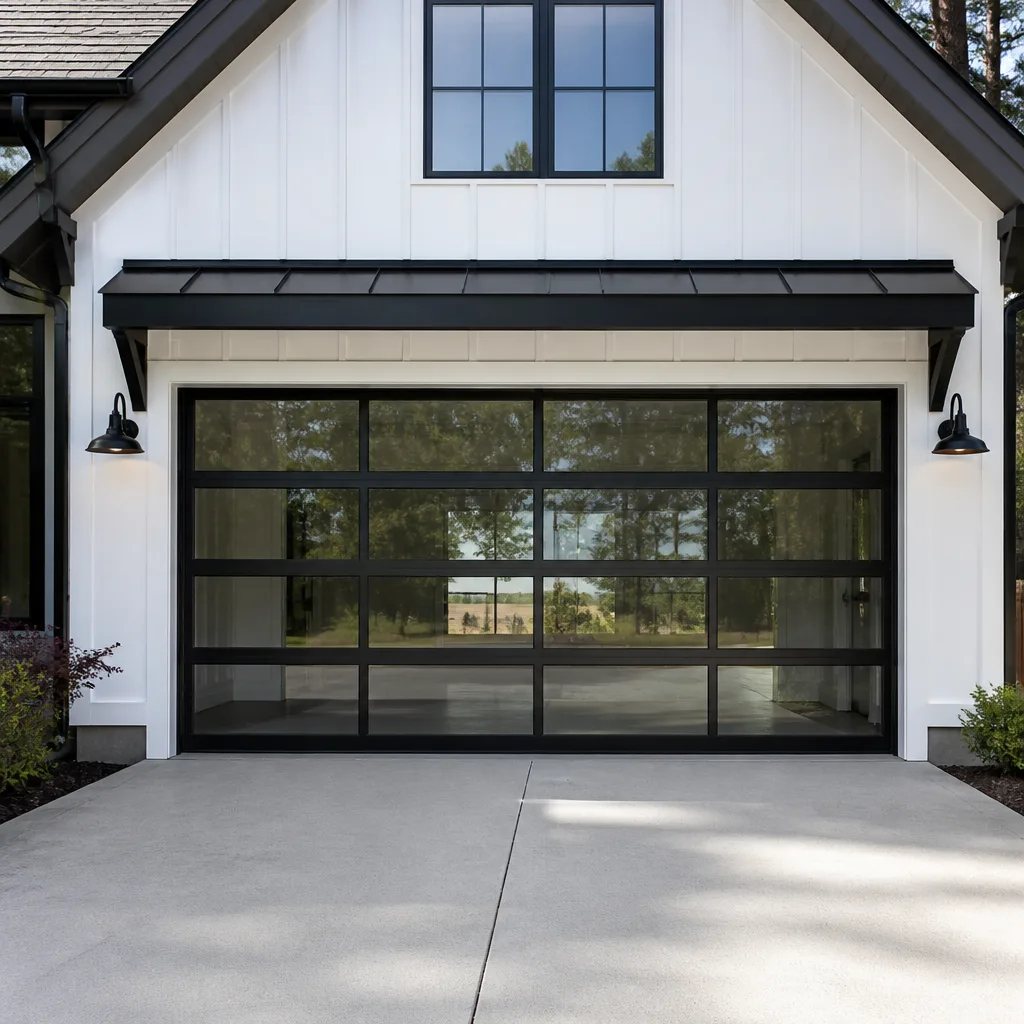 Full-view glass
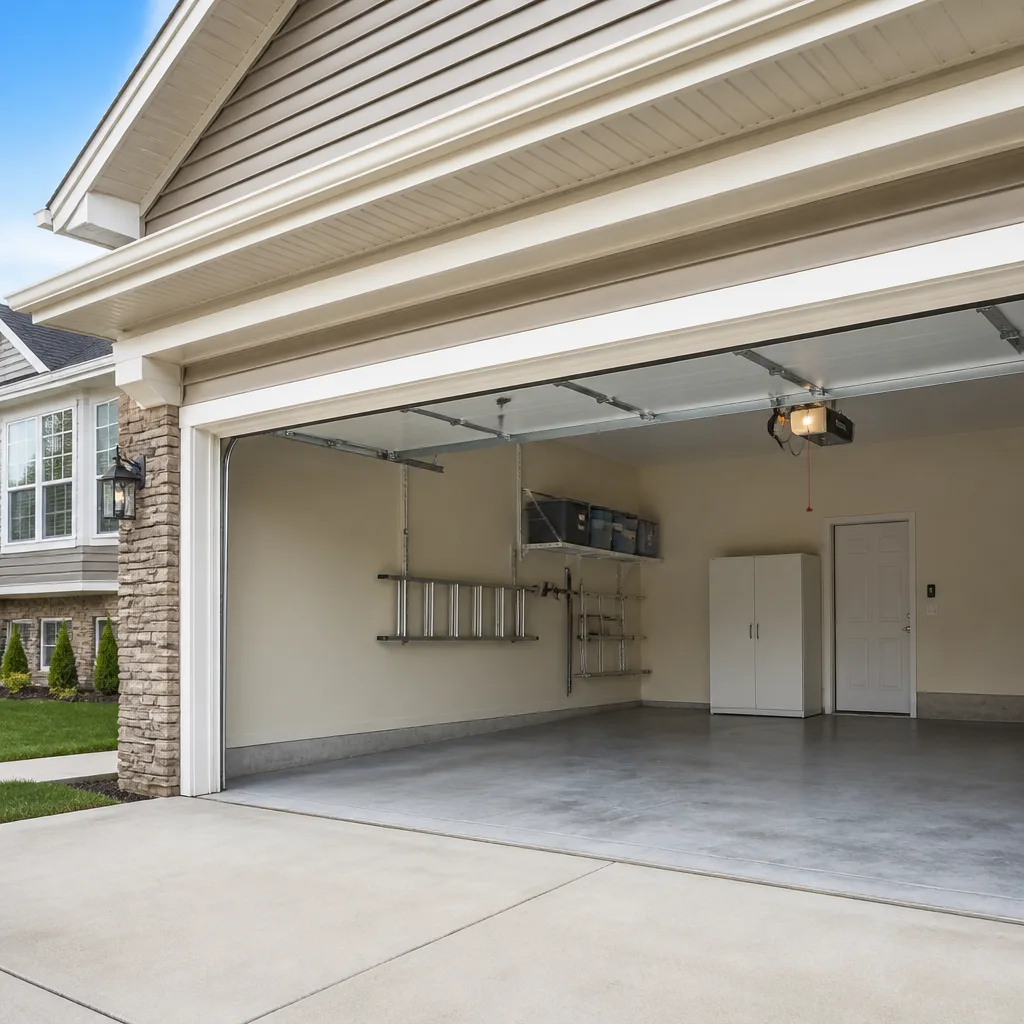 LiftMaster openers
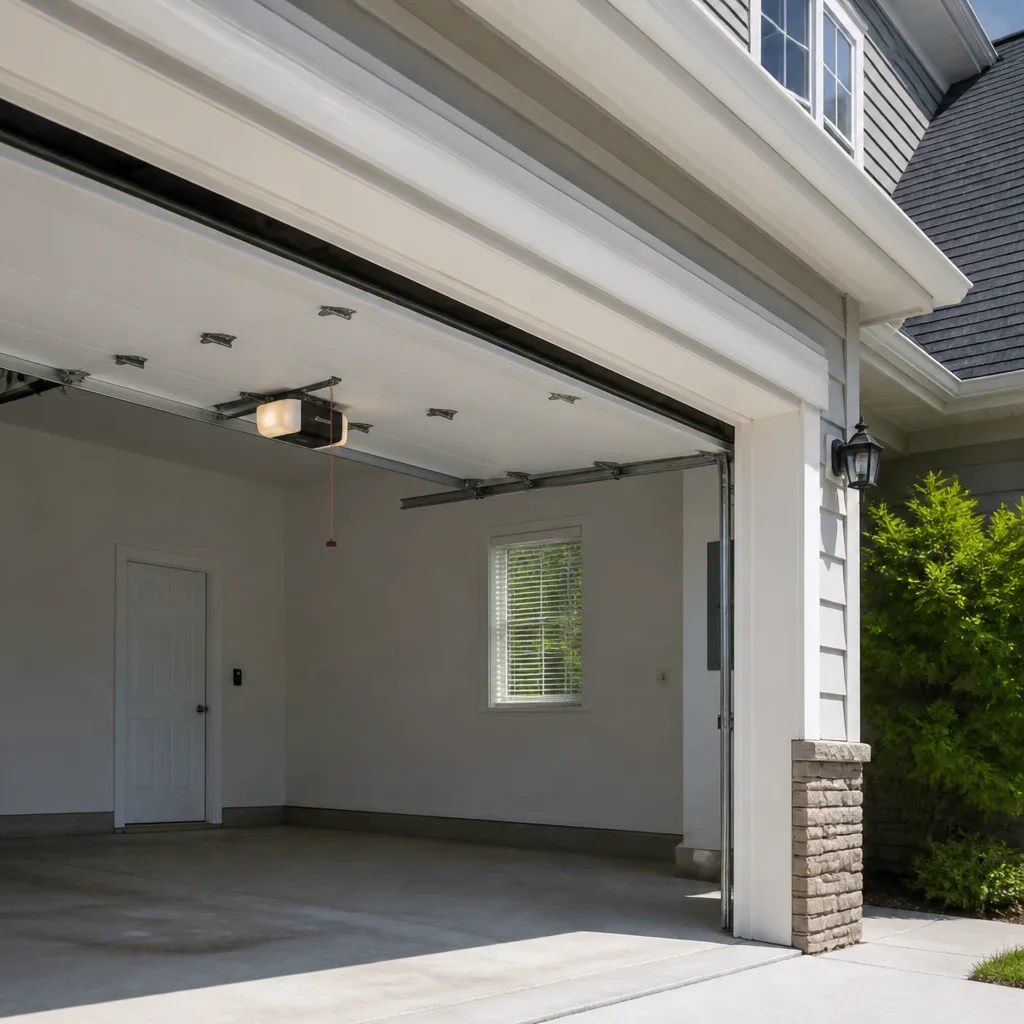 Chamberlain openers
Full 25-point door and opener safety check with every visit - springs, cables, rollers, tracks, and your LiftMaster or Chamberlain opener included
You get a price before we start. It does not change when the pro arrives.
Get your free estimateThe Complete Guide to Garage Doors in Arlington
Most Arlington homes were built between 1950 and 1985, and that single fact shapes almost every garage door problem we diagnose here. Many of those garages were framed with a 7-foot door height, a dimension that doesn’t match the 8-foot openings most replacement panels are milled for today. Homeowners discover the mismatch mid-project, after a panel is already ordered. This guide covers what Arlington’s housing stock, humidity, and HOA rules mean for your door, how to spot a repair that won’t hold, and how to decide between fixing and replacing. It’s written for people who want a straight answer, not a sales pitch.
Quick Answer
A garage door in Arlington is a mechanical system made of four interacting parts: the door and panels, the springs that counterbalance it, the opener and drive, and the tracks and rollers that keep everything aligned. Which part fails determines whether you’re looking at a repair or a replacement. Most doors here are 7 or 8 feet tall, use either torsion or extension springs, and run on openers from LiftMaster, Chamberlain, Genie, or Craftsman. We service all of those, along with doors from Clopay, Amarr, Wayne Dalton, and Raynor. Get the diagnosis right and the fix usually lasts. Skip the diagnosis and you’ll be back where you started within a month.
Styles & brands we work with
- Raised-panel steel
- Carriage house
- Modern flush
- Full-view glass
- LiftMaster openers
- Chamberlain openers
Table of Contents
- Why Arlington’s Housing Stock Changes Everything
- HOA Rules and Door Materials: What to Decide Before You Buy
- How the DC Metro Humidity Cycle Affects Springs and Hardware
- 7-Foot vs. 8-Foot Rough Openings: Why It Matters for Resale
- The Brand Landscape in Arlington and What Each One Costs to Own
- Repair or Replace? Reading the Signs in a High-Value Market
- Spring Safety: Why This Is Not a DIY Job in Arlington
- A Seasonal Maintenance Sequence That Works Here
Why Arlington’s Housing Stock Changes Everything
Arlington garage doors were built for a different era of car and a different era of construction. If your home went up in the postwar decades – and a large share of the county did – your garage was likely framed for a smaller opening than a modern replacement panel requires. We run into this on a regular basis, and it’s the single most common cause of a replacement quote creeping up after the fact.
Here’s what that looks like in practice. A standard replacement panel today is milled for an 8-foot opening. A 7-foot opening means the new door has to be cut, custom-ordered, or the header has to be reframed. None of those are impossible. All of them add to the job.
- 7-foot openings usually point to a home built before the mid-1980s. Expect a custom or modified door, and expect to measure twice before you order.
- 8-foot openings are the modern standard and give you the widest choice of panels off the shelf.
- Low-headroom garages show up often in older Arlington builds and limit which opener types fit without modification.
- Narrow single-car bays in older neighborhoods may not accept a standard double-wide replacement without new track placement.
None of this is a reason to panic. It’s a reason to measure before you shop. If you’re already dealing with a broken door, a garage door repair call starts with a measurement for exactly this reason.
HOA Rules and Door Materials: What to Decide Before You Buy
Arlington has an unusually dense layer of homeowner association rules, and if you live in Cherrydale, Lyon Village, or Waycroft-Woodlawn, your door choice is likely governed by architectural review before you ever see a showroom. We’ve seen homeowners buy a door, then discover the color doesn’t clear the association’s palette. That’s a costly way to learn about the rulebook.
The order of operations matters here.
- Get the association’s design guidelines first. Ask for the approved material and color list before you look at a single panel.
- Submit the architectural request before ordering. Most associations want the panel style, material, color, and sometimes the window layout in writing.
- Consider the material against the humidity. Wood doors are beautiful and, in a humid climate like Arlington’s, they’re the most maintenance-heavy choice you can make. Steel holds up better. Aluminum stays lighter and won’t warp.
- Confirm the opacity of any glass panels. Some associations restrict clear glass because of what’s visible from the street.
- Keep your approval letter. If you sell, a buyer’s agent will ask.
One practical note: because approval can take time, starting the process before your door fails gives you options. Starting it after is how people end up with a temporary board over the opening. If you need help matching a specific style to what’s already in the neighborhood, our Arlington Garage Door Repair Experts team handles the measurement side while you handle the paperwork.
How the DC Metro Humidity Cycle Affects Springs and Hardware
Torsion spring corrosion is a bigger problem in Arlington than in drier parts of the country, and the reason is the humidity cycle rather than any single hot day. The DC metro swings between humid summers and cold, wet winters. Every one of those swings deposits moisture on steel, and every one creates a thin layer of oxidation that compounds over the seasons.
That oxidation shows up in three places.
- On the spring coils. A rusty torsion spring doesn’t fail gracefully. It fails suddenly, often without much warning noise.
- On the hinge and roller pins. Corrosion there creates drag, and the opener works harder to move the same door.
- On the bottom seal. Arlington winters get cold enough to freeze a seal to the slab. When the door opens, a brittle seal tears.
What actually helps is preventive, and it’s cheap. A light application of lubricant on the spring, hinges, and rollers once a season slows the oxidation cycle considerably. Keep the bottom seal pliable and clear of standing water. Clear the tracks of grit and leaf debris, which trap moisture against the steel.
What doesn’t help is ignoring a spring that’s already started to rust. Once the coil shows visible oxidation, it’s past the point where lubrication buys much time. That’s when a garage door spring repair visit is worth scheduling before failure rather than after.
7-Foot vs. 8-Foot Rough Openings: Why It Matters for Resale
If you’re planning to sell an Arlington home in the next few years, your garage door opening height is a detail worth understanding. It affects what a buyer can park inside, what a replacement will cost them, and how the garage photographs in a listing.
Here’s the comparison that matters:
- 7-foot opening: Common in pre-1985 Arlington homes. Limits replacement to custom or cut-down panels. Most modern SUVs and trucks with roof racks clear it, but not all.
- 8-foot opening: Modern standard. Broad panel availability, lower replacement cost, no surprises at the trim.
- Headroom above the opening: Determines whether a torsion spring assembly fits at all, and which opener drive type is workable.
- Side clearance: Affects track placement and whether a low-profile opener will fit.
The practical takeaway: if you own a 7-foot-opening home and you’re doing a replacement anyway, the reframe question is worth asking. It’s not always the right call financially, but it’s a decision you should make consciously rather than discover halfway through.
For resale value specifically, a functional, well-fitted door reads as a well-maintained house. A door that sticks, shudders, or won’t close is one of the few things a buyer can test in thirty seconds and remember. That’s the real argument for keeping the system in order even when you’re not planning to replace it.
The Brand Landscape in Arlington and What Each One Costs to Own
The Arlington market runs on a handful of brands for a reason: they’re the ones already installed here, which means parts are available and technicians have seen the failure modes before. We work on all eight of the major manufacturers – LiftMaster, Chamberlain, Genie, Clopay, Amarr, Wayne Dalton, Craftsman, and Raynor – and we don’t push one over another. The door you already have is the door we diagnose.
What each tends to mean for long-term ownership:
- Clopay and Amarr doors: Widely installed across Arlington. Panel and section availability is strong, which keeps replacement cost reasonable when a single panel is damaged.
- Wayne Dalton doors: Common in older builds. Some older models have proprietary panel profiles, so matching a damaged section is worth checking before you commit to a full replacement.
- LiftMaster and Chamberlain openers: The majority of the market. Parts are easy to source, and connectivity features are well supported.
- Genie and Craftsman openers: Solid, reliable, and still fully serviceable. Some older Craftsman units need a specific replacement part that isn’t a universal fit.
- Raynor doors: Robust builds, and serviceable when the right parts are ordered.
Here’s the thing to understand about maintenance cost: it tracks with parts availability, not with brand prestige. A door whose panels can be matched in a week is cheaper to own over ten years than a door whose panels take a month. If your opener is the failing part, a garage door opener repair call covers the brand-agnostic diagnostic step before anyone quotes a replacement.
Repair or Replace? Reading the Signs in a High-Value Market
Arlington’s home values change the repair-versus-replace math in a way that national guides don’t account for. In a market where the house itself is a significant asset, a garage door that’s structurally sound but cosmetically tired is usually worth repairing rather than replacing. But there’s a point where the repair stops being the smarter financial call, and it’s worth knowing where that line sits.
Repair is usually the right move when:
- The door panels are intact and the frame is square.
- The failure is mechanical – a spring, an opener, a roller, a hinge.
- The door is under a decade old and the tracks aren’t bent.
- A single panel is damaged and a match can be sourced.
Replacement tends to be the better call when:
- Multiple panels are delaminating or warping from moisture.
- The bottom section is rusted through and the tracks have lost their straight line.
- Parts for the existing door are no longer available and a patch would be cosmetic at best.
- The door is a persistent source of opener strain and constant adjustment.
The reframe question matters here too. If the opening is 7 feet and you’re replacing anyway, building in the height change is worth pricing. If you’d rather not, a repaired 7-foot door is still a perfectly sound door.
Spring Safety: Why This Is Not a DIY Job in Arlington
A torsion spring under load stores serious energy, and releasing it incorrectly can cause severe injury. We don’t give step-by-step instructions for spring work, because the risk isn’t worth it. What we will do is tell you what to check from a safe distance so you know whether to call.
Signs your spring needs professional attention:
- A loud bang from the garage followed by a door that won’t lift.
- A visible gap in the torsion spring coil.
- The door feels far heavier than it used to when you lift it by hand.
- The opener runs but the door doesn’t move.
- A door that comes down too fast or won’t stay up.
If you see any of those, stop operating the door. Don’t try to lift it manually and don’t try to wind anything. Call a technician who does this every day. Our technicians have up to 10 years of experience with torsion and extension spring work specifically, across every brand we service. That experience is the safety layer you’re paying for.
Call (844) 524-5950. We answer 24/7. Fast dispatch from 7am to 7pm, Sunday through Friday.
A Seasonal Maintenance Sequence That Works Here
A garage door is a system, and systems respond to sequence. Here’s the order we recommend for Arlington homes, tuned to the local humidity and winter cycle.
- Spring and fall: lubricate the moving parts. Springs, hinges, rollers, and the opener rail. This is the single highest-return task and it directly addresses the humidity-driven corrosion cycle.
- Spring: check the bottom seal. Look for cracking, hardening, or separation from the door. A frozen seal in winter starts as a brittle seal in spring.
- Fall: test the safety reverse. Put a small object in the door’s path and confirm the door reverses on contact. If it doesn’t, stop using the opener until it’s serviced.
- Fall: clear the tracks. Debris traps moisture. A clean track extends roller life and reduces opener strain.
- Before winter: listen to the door. A door that shudders, squeals, or hesitates is telling you something. Diagnose it in October rather than in a January cold snap.
- Annually: have the balance checked. Disconnect the opener and lift the door by hand halfway. It should hold. If it drops, the spring tension needs adjustment.
None of these tasks require tools beyond a lubricant and a rag, and none of them require you to touch a loaded spring. The last one – the balance check – is the one people skip, and it’s the one that identifies a spring problem before it becomes a failure.
Common Mistakes to Avoid
- Ordering a door before measuring the opening. Arlington’s 7-foot openings catch people out constantly. Measure the rough opening height, not the door panel height, before you buy anything.
- Buying before checking the HOA rules. In Cherrydale, Lyon Village, and Waycroft-Woodlawn, the architectural review can add weeks. Confirm the material and color are approved before the order goes in.
- Skipping lubrication through the humid months. The DC metro humidity cycle is what drives spring corrosion. Three minutes with a lubricant twice a year is the cheapest insurance available.
- Trying to fix a broken spring yourself. Torsion springs are under load and can cause serious injury. This is the one category of garage door work that should always be a professional call.
- Assuming a stuck door means a dead opener. Often the opener is fine and the spring has failed. Diagnose before you replace the wrong part.
- Choosing a door brand by reputation instead of parts availability. A door whose panels can be matched quickly costs less to own than one that can’t, regardless of the brand name.
- Ignoring a shudder or a squeal. Those are early warnings. Treating them as normal is how a small fix becomes a large one.
See the difference
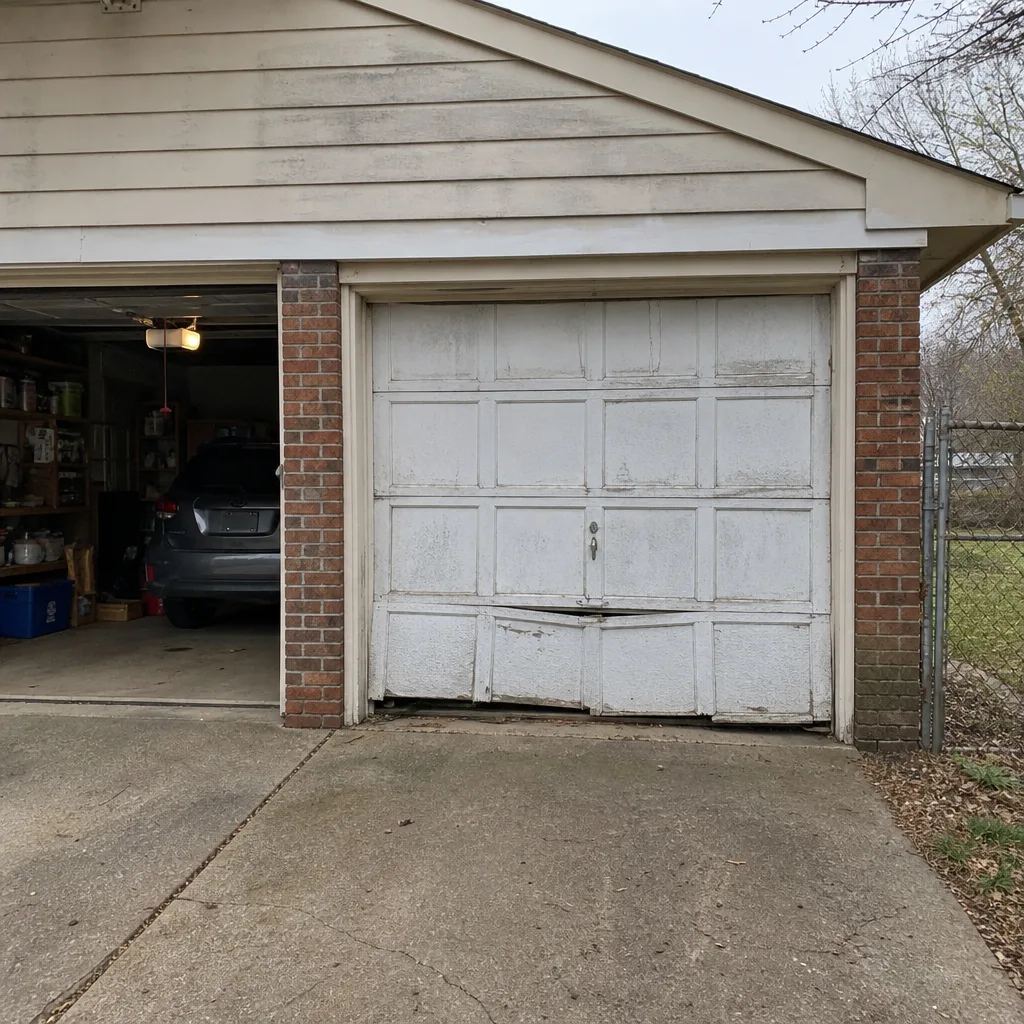 Before
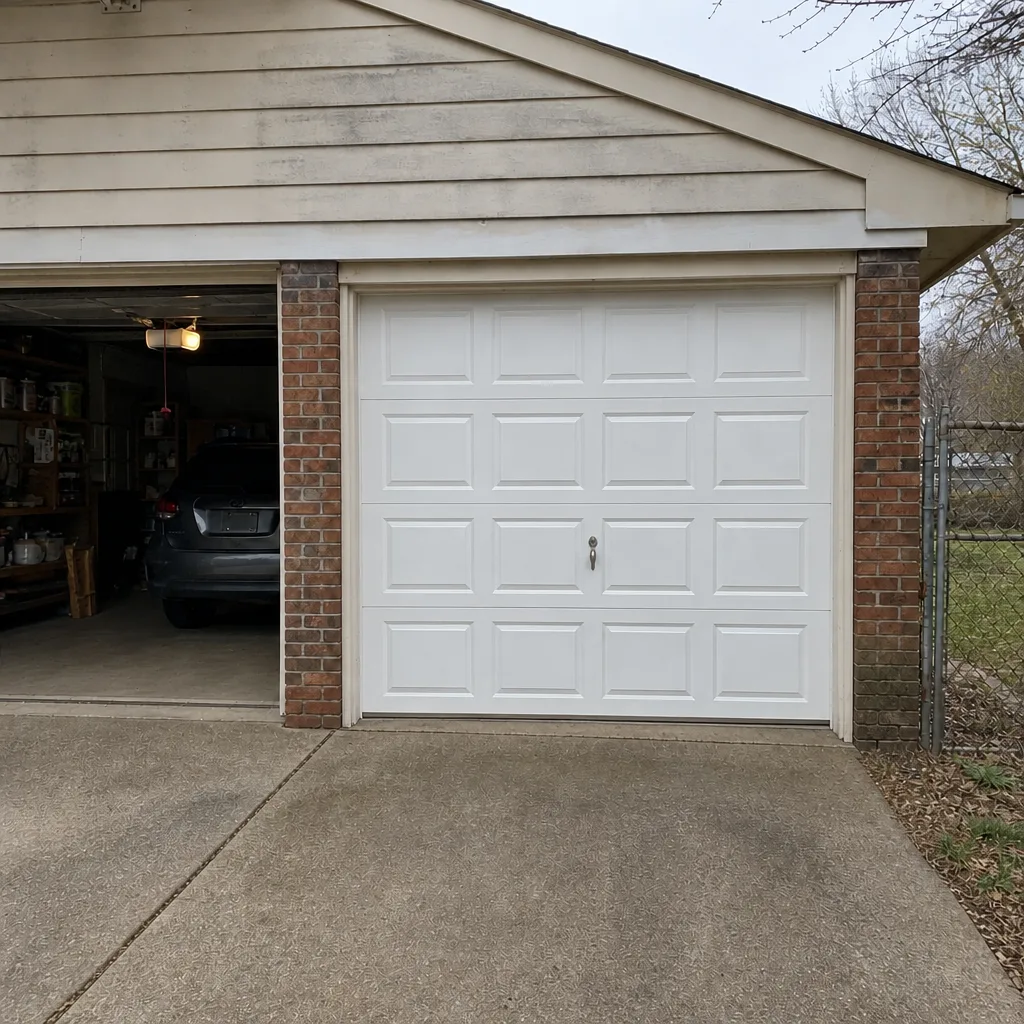 After
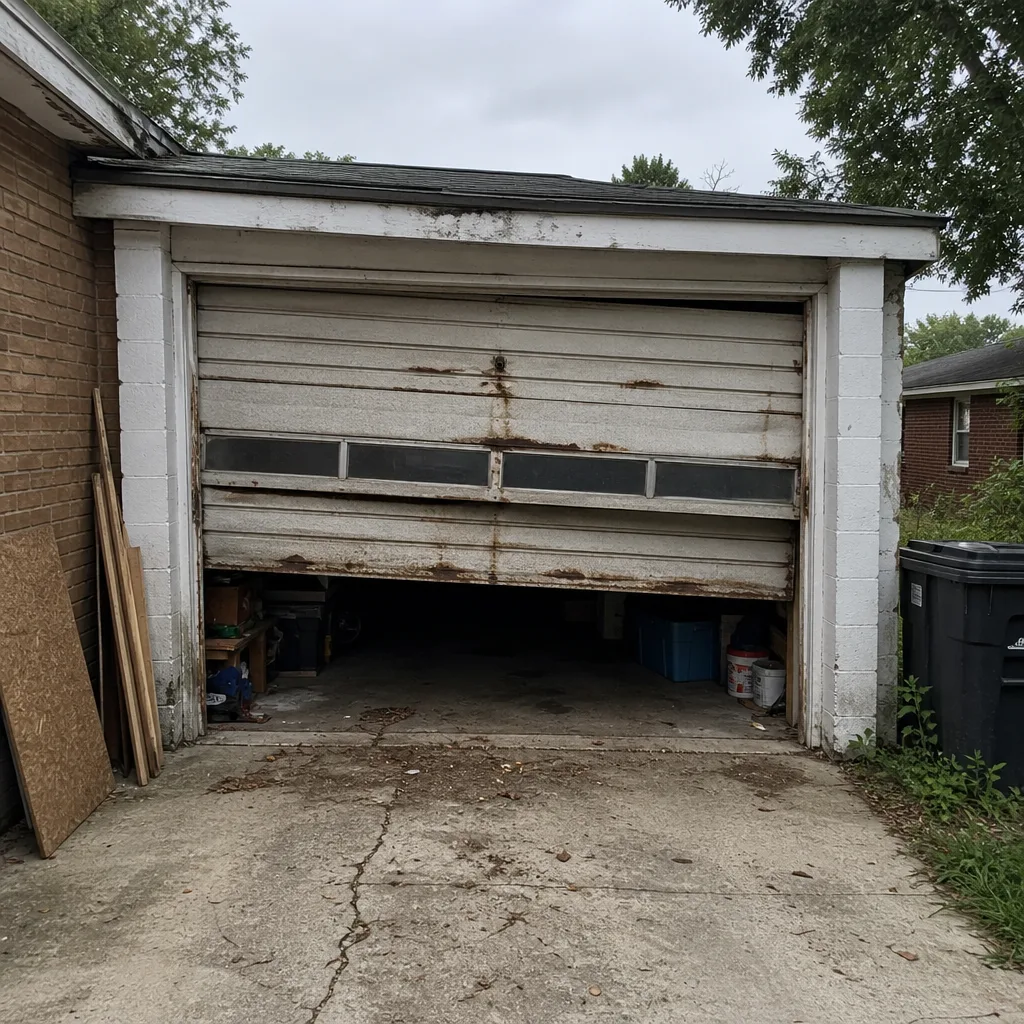 Before
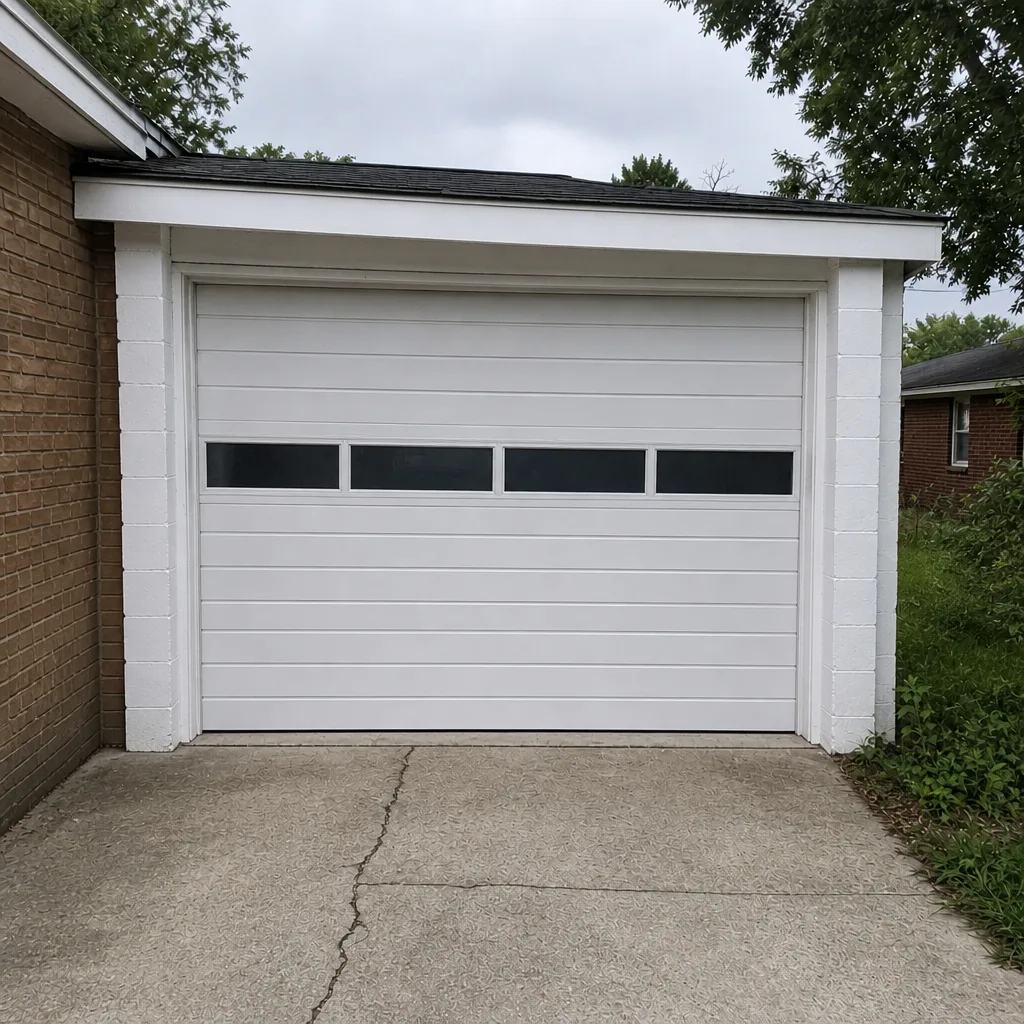 After
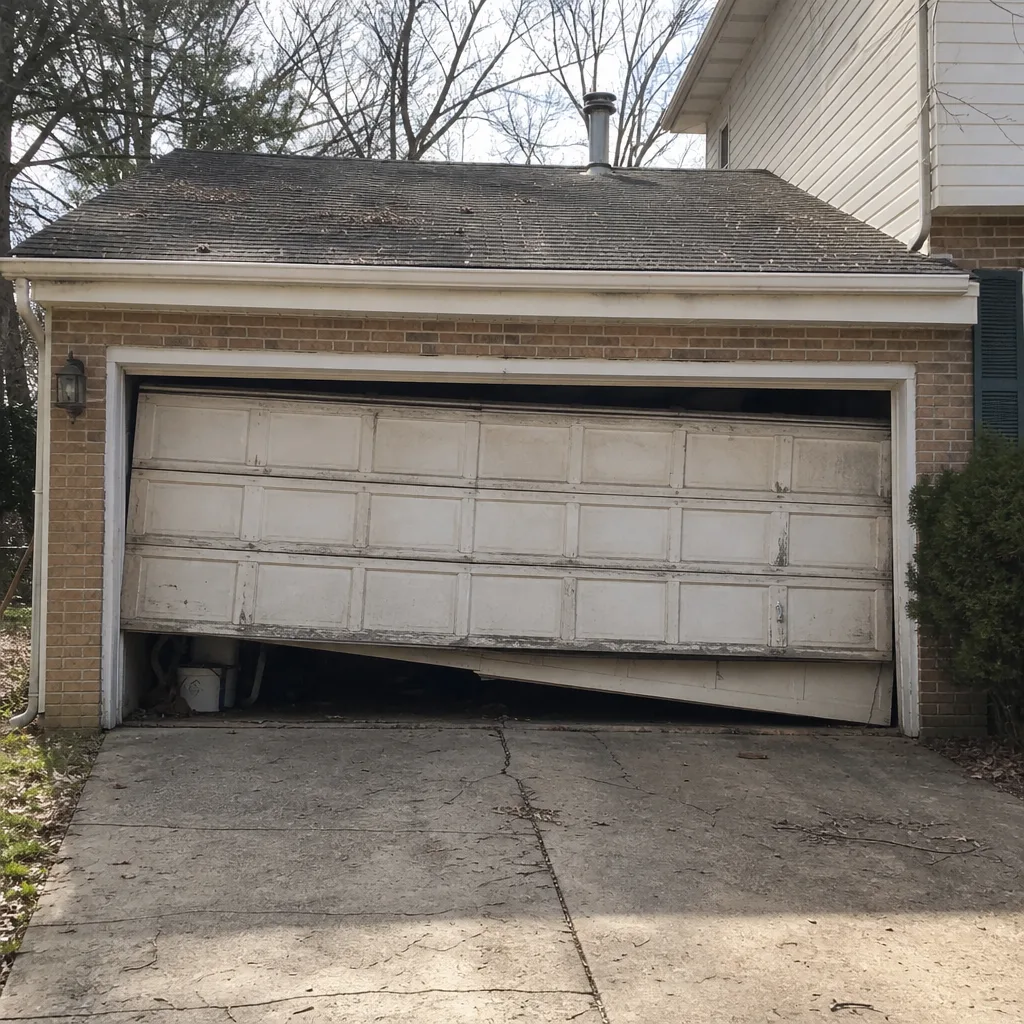 Before
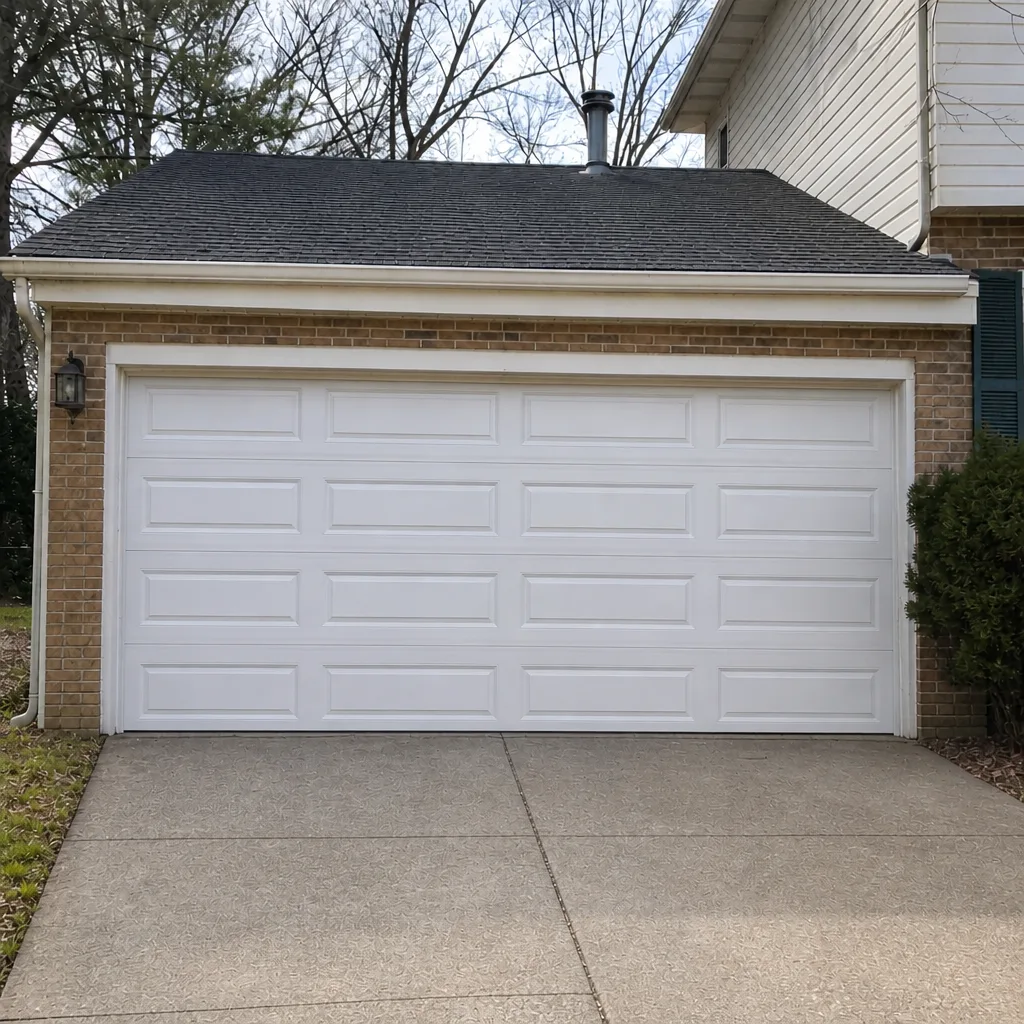 After
When to Call a Professional
Call a professional when the door won’t move, when you’ve heard a bang from the garage, when the opener runs but the door stays put, or when the door reverses without command. Call when you see a gap in a spring coil or visible rust on the coils. Call when the door shudders, sticks, or drags on one side – that’s a track or roller issue that gets worse with use. Call before you order a replacement door, especially in an older Arlington home with a 7-foot opening. And call before you touch a spring. Arlington Garage Door Repair Experts offers free estimates in Arlington – call (844) 524-5950. We answer 24/7. Fast dispatch from 7am to 7pm, Sunday through Friday.
Frequently Asked Questions
Most single-spring repairs in Arlington fall in the range of a few hundred dollars, and a matched pair is usually replaced together, which roughly doubles that figure. The written estimate is what sets the final price – you’ll have it before any work starts. Call (844) 524-5950 for an exact quote; estimates are free.
Measure the rough opening from the floor to the bottom of the header, not the door panel itself. If you get roughly 84 inches, you have a 7-foot opening, common in Arlington homes built before 1985. If you get roughly 96 inches, you have the modern 8-foot standard. Measure before ordering any replacement panel – the difference matters.
Yes. We work with the door you already have and with the color and material your association approves. The key is getting the approval in writing before the order goes in, especially in HOA-dense neighborhoods like Cherrydale, Lyon Village, and Waycroft-Woodlawn. If the replacement panel has to match an older style, we check availability first.
The DC metro humidity cycle deposits moisture on steel through the seasons, and each humid summer followed by a wet winter adds a layer of oxidation to the spring coils. That corrosion weakens the coil over time. Seasonal lubrication slows it down, but once rust is visible on the coil, replacement is the safer path.
We service LiftMaster, Chamberlain, Genie, Clopay, Amarr, Wayne Dalton, Craftsman, and Raynor. If your door or opener is one of those eight, we can diagnose and repair it. We start with the actual failure – the door, the opener, or the spring – rather than with a brand preference.
Yes, same-day service is usually available for a door that won’t close. Call (844) 524-5950. We answer 24/7. Fast dispatch from 7am to 7pm, Sunday through Friday. If your call comes outside dispatch hours, we’ll book you into the next opening, Sunday through Friday, 7am to 7pm.
No. The price is quoted and agreed before any work starts, and the written estimate sets the final price. If we find something different from what we expected, we tell you before we proceed – you won’t get an invoice that’s larger than the quote.
It depends on the door’s structural condition. If the panels are sound and the failure is mechanical, repair is usually the smarter financial call in a high-value market. If multiple panels are warping or delaminating from moisture, replacement tends to make more sense. A free estimate will tell you which one applies.
The Bottom Line
Arlington garage doors are shaped by three local forces: a housing stock with 7-foot openings that don’t match modern panels, a humidity cycle that accelerates spring corrosion, and dense HOA rules that govern material and color before you buy. Measure the rough opening before ordering anything. Check the association’s guidelines before choosing a color. Lubricate the moving parts twice a year, and never touch a loaded spring. When a repair is needed, get the diagnosis right – door, opener, or spring – and the fix will hold. If you’re not sure which one it is, call (844) 524-5950 for a free estimate.
Written by the team at Arlington Garage Door Repair Experts.